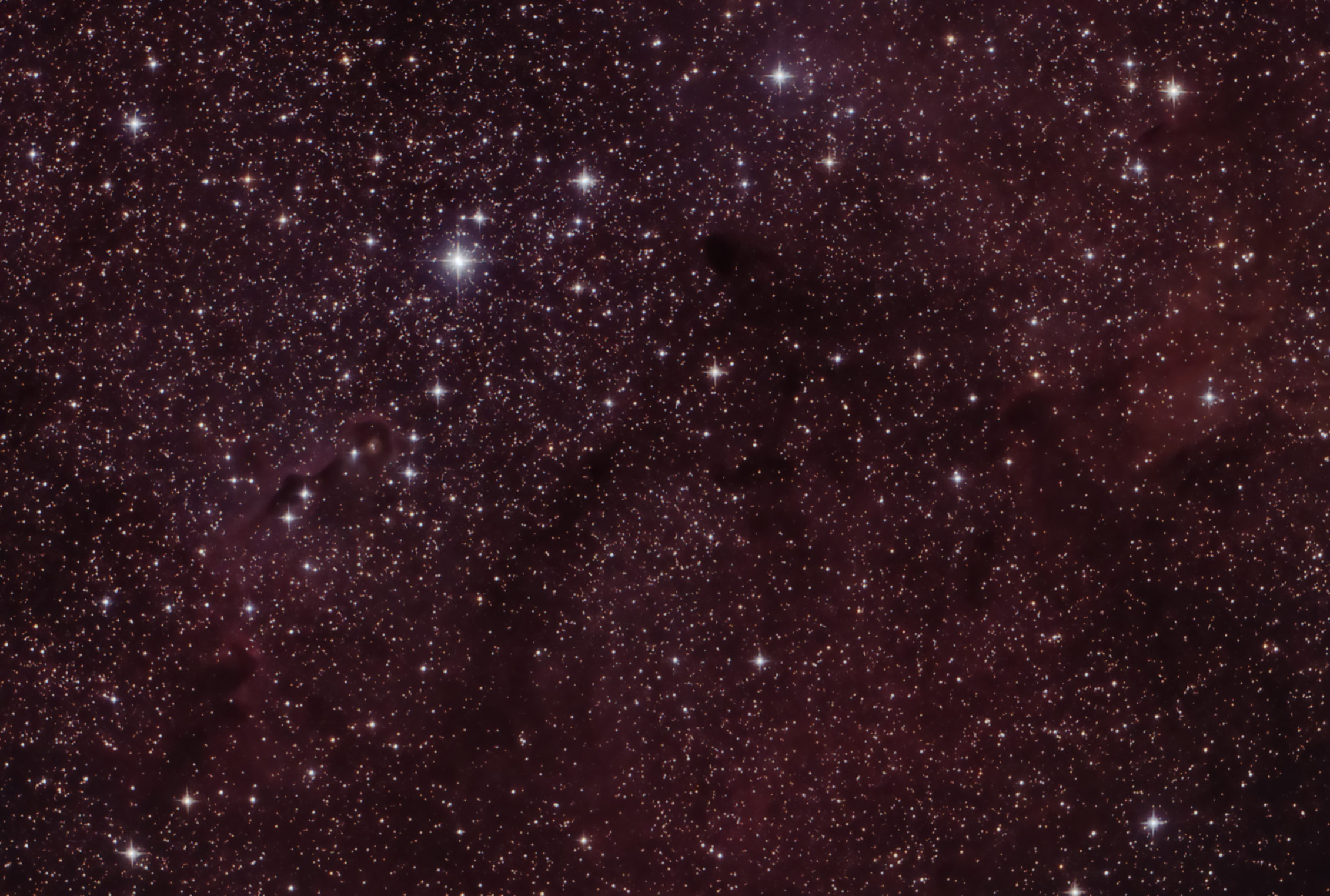
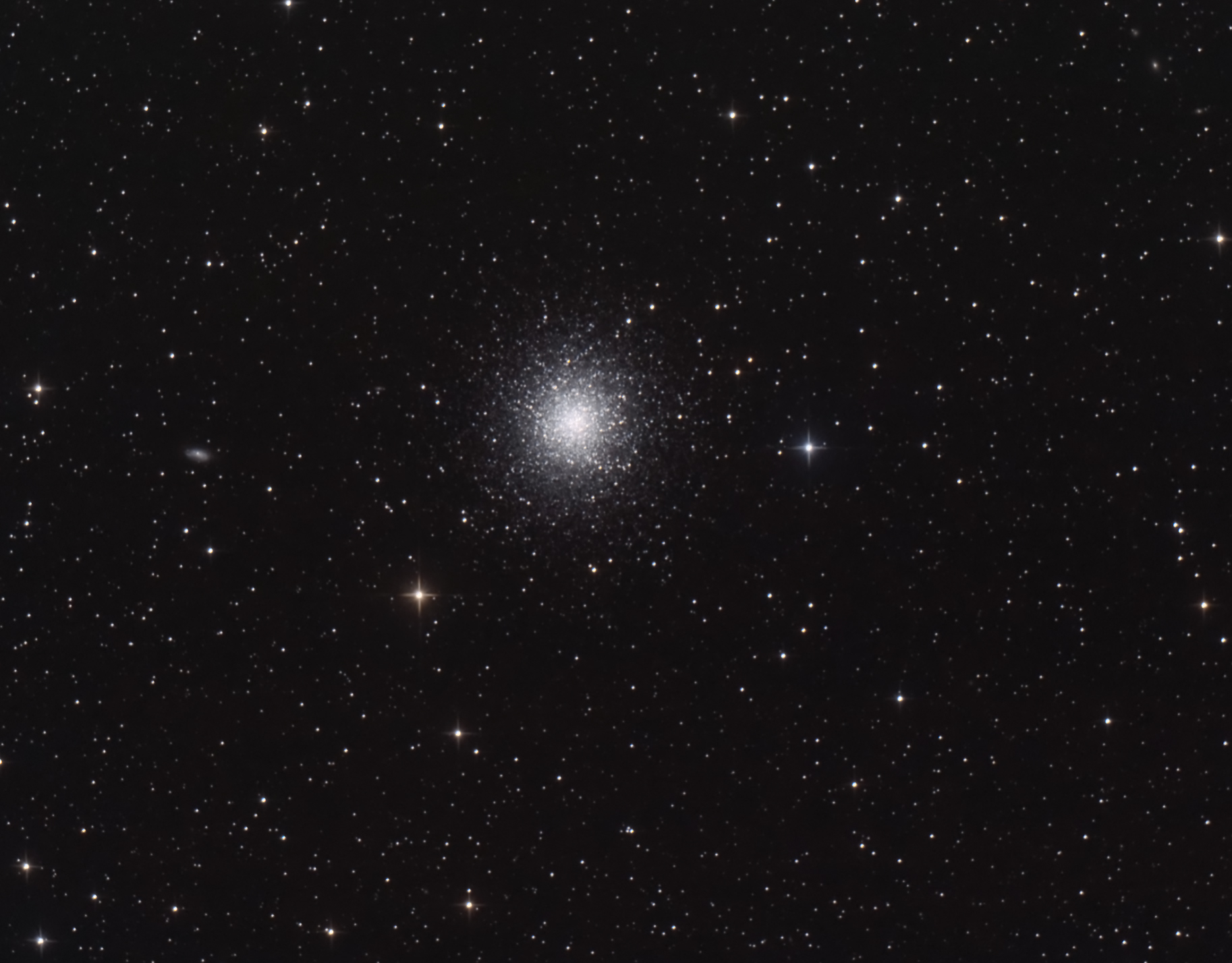
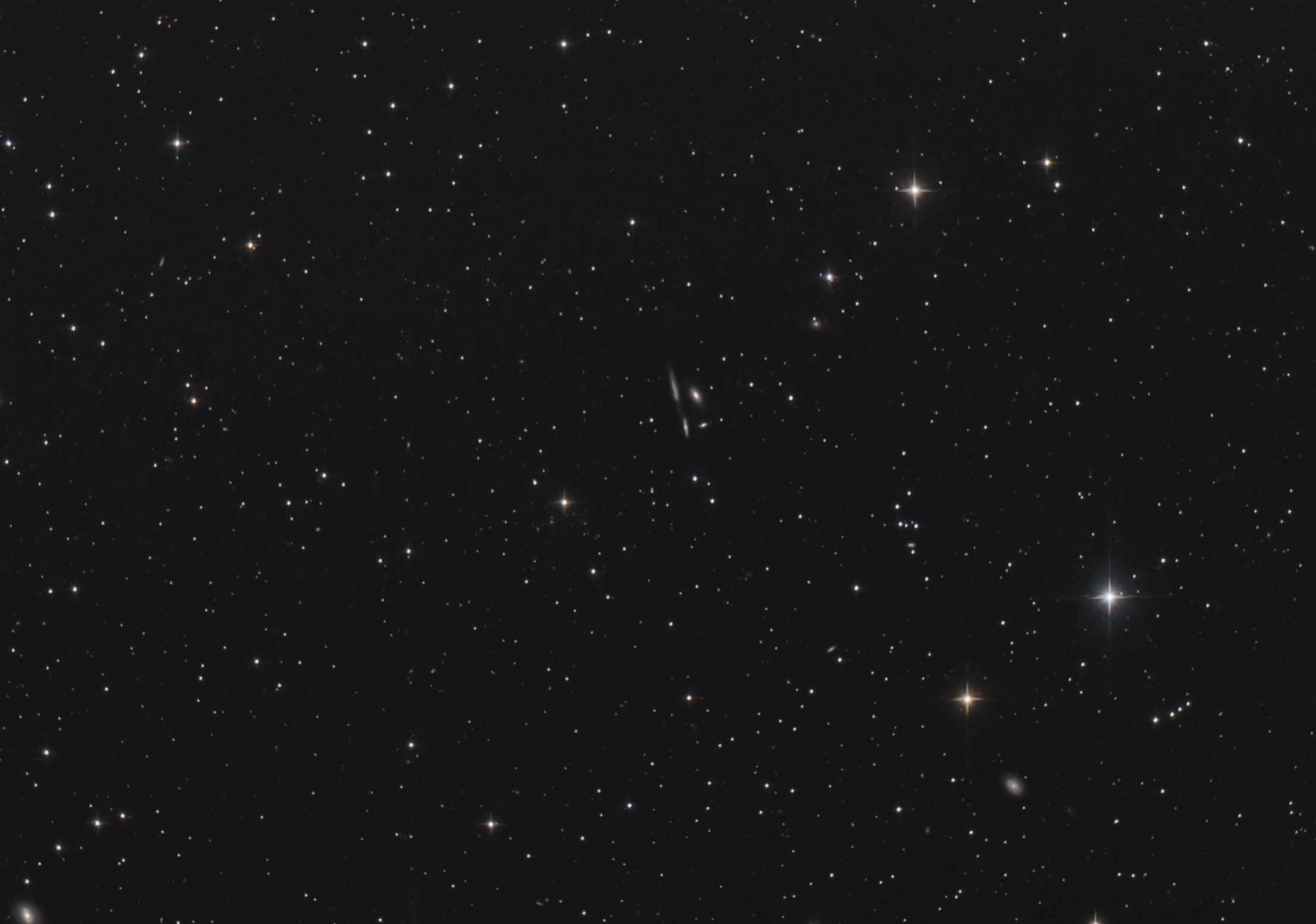
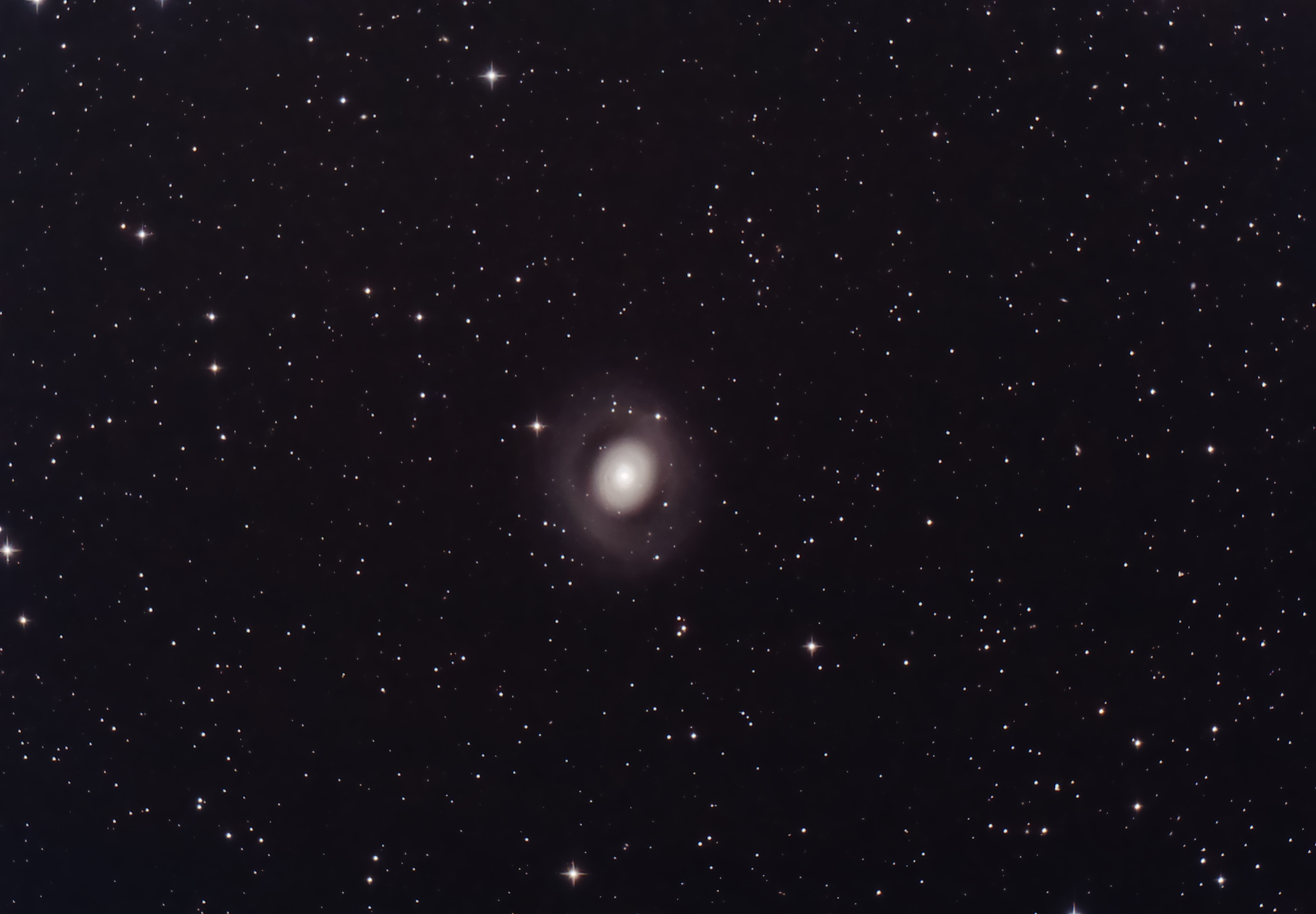
From June 21st I captured only 10 good frames for a 50 minute stack. The nebula is in the lower left quadrant.

“The Elephant’s Trunk Nebula is over 20 lightyears long and can be found running through IC 1396, a young star cluster embedded within a cloud of glowing, ionised gas in the Cepheus constellation.
The Elephant’s Trunk is composed of cool interstellar dust and gas, which blocks out light on its way to Earth and leaves behind a long, thin silhouette that gives the nebula its name”

Elephant Trunk Nebula

This is a large and bright winter time emission nebula that is very rewarding to photograph. I last imaged this nebula three years ago with much the same story as far as the long pause at getting out to the telescope with winter season delays. Last night presented ideal conditions and produced this run of 32 five minute frames. Just the sub frames on the computer screen were impressive as they were coming in. Temperature was in the teens and the frost was not too bad as the evening progressed. I ended the run around midnight, as the telescope was near the end of its reach past the meridian and it was getting low in the sky.

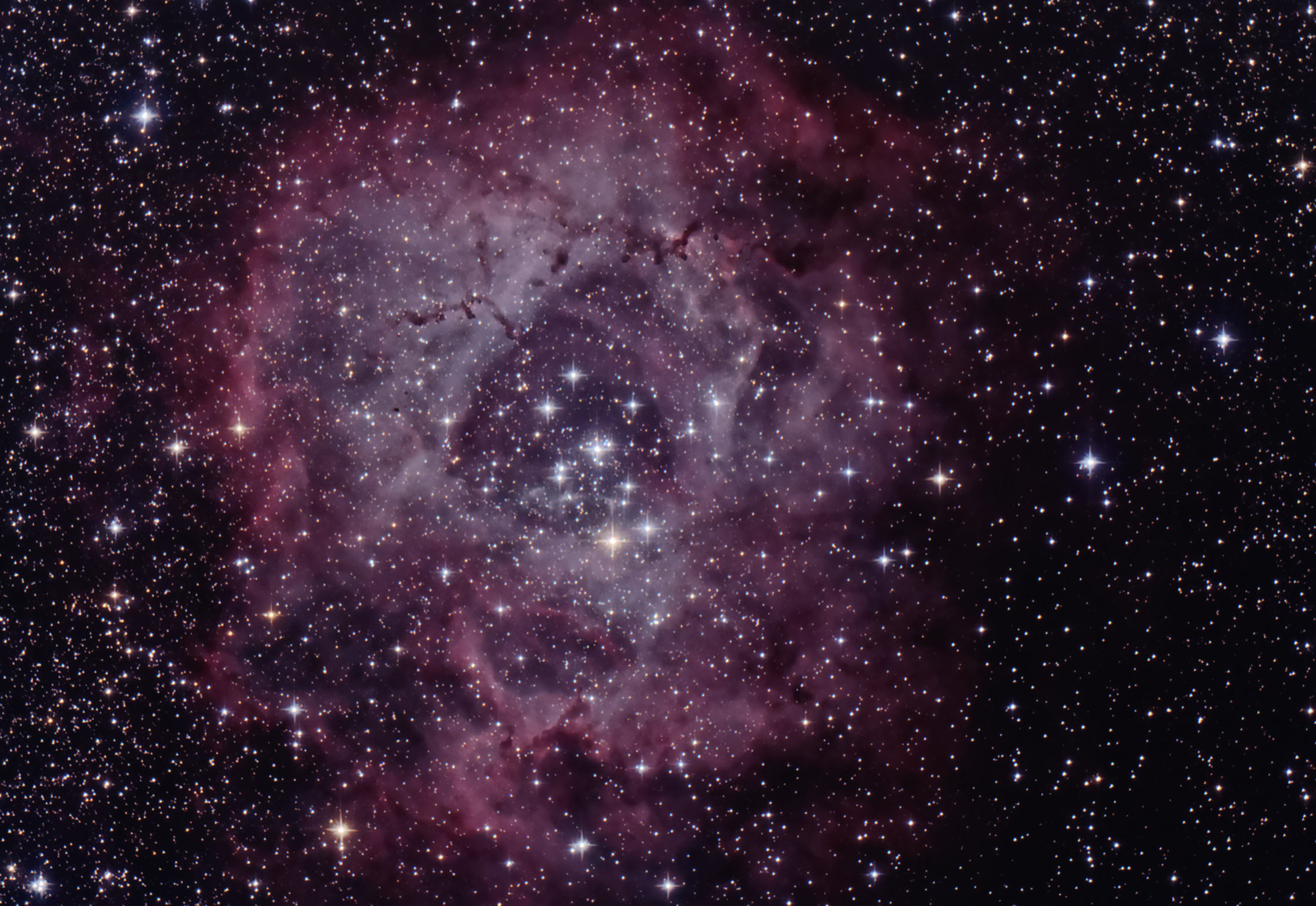
5000 light years away, the Rosette Nebula contains an open cluster of 2500 young stars which are closely associated with the nebulosity, having been formed from the nebula’s matter. The most active region has plasma thought to be 100 to 1000 times hotter than a typical nebula, which we see as red light from hydrogen emissions. These high temperatures are thought to be the influence of more than one of the rare and massive O-type stars.  This nebula is some 130 light years across. 
Rosette Nebula 2022

From October 30th I was out for a long night and ended with 38 frames of 360sec each, a total of almost 4 hours. My longest run yet! I might try processing again since it seems this should have more color from others images but most people over saturate reality in my opinion.

From the webs…..

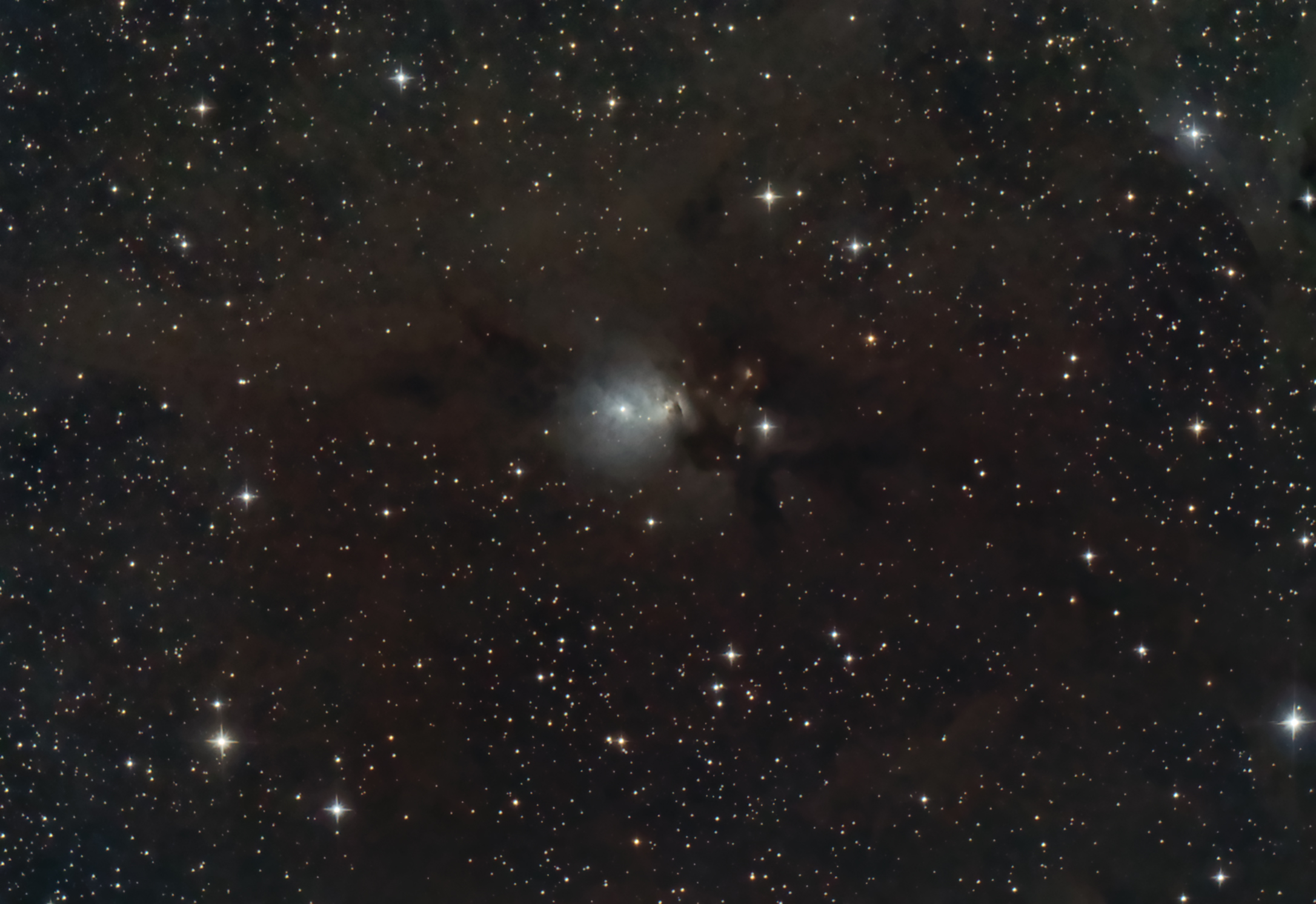
Embryo Nebula       NGC 1333 a beautiful reflection nebula, dominated by bluish hues characteristic of starlight reflected by interstellar dust. It lies at the edge of the Perseus molecular cloud complex at a distance of about 1000 light-years and is an active star-forming region.

Embryo Nebula

Although I have captured this one a couple of times I found myself drawn to try something a bit different. There was a crescent of a moon in the sky and the evening started out rather more breezy than I would like so I thought I should try a brighter target in the dark portion of the sky I tend to gravitate toward. I reduced the exposure time to 200 seconds and this image is a stack of 43 frames. That is the most frames I have used so far with my simple DSLR camera prime setup still on the 6″ astrograph. The results are indeed better than my March 7th 2018 image.

Whirlpool Galaxy

Near New Moon on March 13th I was out again taking advantage of this rare string of clear nights. I made my longest run of 6 minute subs totaling nearly four hours of integration.  A low aparent brightness target, NGC 4395 proved challenging to process even with the longer exposures and lots of them. This is a minimal crop so it presents my usual full field indicating a good sized object just rather dim in a dark patch of sky.


NGC 4395